Yoga Practice Guidelines for Beginners
A disciplined and mindful approach is essential for safe and effective yoga practice. The following general guidelines help establish a stable and beneficial practice routine.
- Time of Practice
Yoga may be practiced at any suitable time except immediately after meals. However, early morning (before sunrise) and evening (around sunset) are considered most suitable due to a calm environment and balanced bodily state. - Empty Stomach Condition
Practice should be done on an empty stomach. Maintain a gap of at least 3–4 hours after a full meal and 1–2 hours after a light meal. If needed, light liquids such as water or juice may be taken before practice. - Bowel and Bladder
It is advisable to empty the bowels and bladder before practice. Establishing a regular routine helps in maintaining comfort and ease during practice. - Place of Practice
Choose a clean, quiet, and well-ventilated space. Avoid dusty, polluted, excessively windy, or noisy environments. The place should be free from distractions and obstacles. - Practice Surface
Practice on a firm surface using a mat, folded blanket, or natural material. Avoid overly soft or uneven surfaces. - Clothing
Wear light, loose, and comfortable clothing that allows free movement. Remove accessories such as watches or glasses before practice. - Sequence of Practice
A balanced practice sequence should be followed:
Asana → Pranayama → Relaxation → Meditation
Counterposes may be included where required to maintain balance in the body. - Breathing Awareness
Breathing should generally be through the nose unless instructed otherwise. Avoid unnecessary breath retention. Maintain coordination between breath and movement. - Effort and Limitations
Avoid excessive strain. Do not perform movements with jerks or force. Practice in a slow and controlled manner within your capacity. If pain, discomfort, or dizziness occurs, stop immediately and rest. - Relaxation
Include relaxation (such as Shavasana) during or after practice, especially when fatigue is felt. At the end of the session, rest for at least 10–15 minutes. - Food After Practice
Light refreshments (such as water, juice, coconut water, or milk) may be taken after about 30 minutes. A full meal should be taken only after at least 45 minutes. If needed, small amounts of water may be taken during practice. - Bathing
Bathing may be done before practice. Avoid bathing immediately after practice. Allow the body to normalize and then bathe after some time. - Awareness and Concentration
Maintain awareness of body movements, breath, and internal sensations. Avoid unnecessary movement of the eyes. Where appropriate, practice with eyes gently closed to enhance internal awareness. Avoid mechanical practice. - Health Conditions and Medical Care
If you have any medical condition or chronic issue, inform the instructor before starting practice.
Do not discontinue or modify any ongoing medical treatment without consulting a qualified medical professional. - Special Conditions
- Avoid certain postures (especially inversions) during menstruation where appropriate
- Pregnant individuals should practice only under proper guidance
- Those with high blood pressure, vertigo, or similar conditions should avoid specific practices as advised
- Environmental and Physical Conditions
Avoid practice immediately after prolonged sun exposure or extreme fatigue. Ensure the body is in a balanced and comfortable state before beginning. - Importance of Guided Instruction
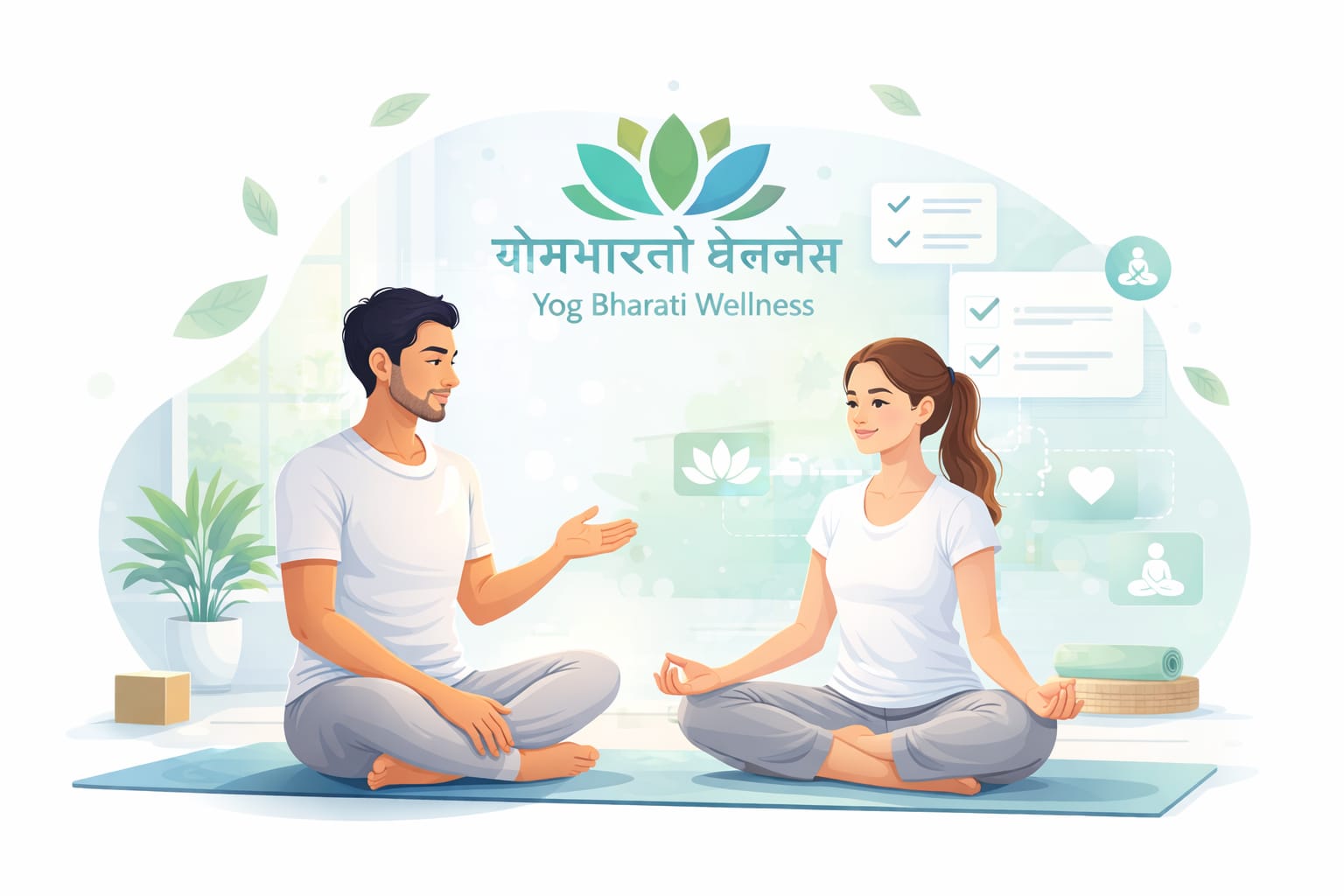
To minimize errors and avoid potential adverse effects, it is advisable to begin yoga practice under the direct guidance of an experienced and qualified instructor.
Relying solely on television, internet resources, or books without proper supervision may lead to incorrect practice and undesirable outcomes. - Consistency and Discipline
Regular, moderate, and disciplined practice is more beneficial than irregular or excessive effort. Progress gradually. Begin with simple practices and advance step by step.
Allow the body to return to a normal state after each practice before proceeding further.
Yoga is a gradual and progressive process — patience, consistency, and awareness are essential.
Acharya B. S. ‘Yogi’
Yoga Expert and Wellness Coach
Founder & Lead Instructor, Yog Bharati Wellness